Why Smart Manufacturers Are Owning Less
For generations, industrial success was measured by what a company owned. Large factories, heavy machinery and sprawling production plants stood as visible signs of financial strength. The bigger the facility and the longer the asset register, the more established the business appeared.
Categories:
Industry , News , Technology
Date Posted:
July 20, 2026
If a piece of infrastructure was important to production, the accepted wisdom was simple: buy it, own it and maintain complete control over it.
That philosophy made sense when capital was relatively affordable, demand was easier to forecast and supply chains moved with fewer surprises. Businesses could invest millions of rand in equipment, depreciate it over many years and trust that production requirements would remain fairly stable.
The economic picture has changed.
Capital costs more. Markets move faster. Customer demand can rise, fall or shift with little warning. Energy prices fluctuate, supply chains remain vulnerable and companies are under constant pressure to improve productivity while protecting cash.
In this environment, ownership itself deserves closer examination.
Owning industrial equipment is not necessarily a bad decision. In some cases, it remains the right one. But every asset carries a financial burden, even when it performs perfectly. Capital tied up in supporting infrastructure cannot be used to expand production, improve automation, develop new products, hire skilled people or enter new markets.
The question is no longer simply, “Can we afford to buy this equipment?”
A better question is, “Is owning this equipment the smartest use of our capital?”
Ownership Is No Longer the Default
This change in thinking has already reshaped many industries.
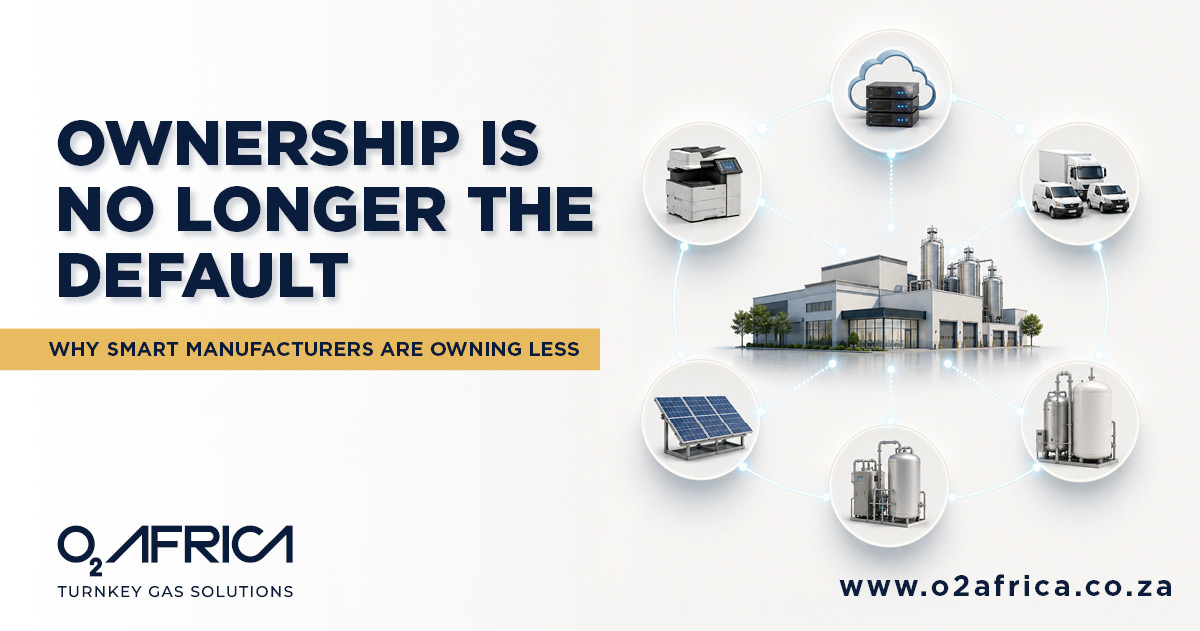
Most businesses no longer build and maintain their own data centres. They use cloud computing services that provide access to processing power, storage and software without requiring them to own every server involved. Companies have also moved away from buying large software packages outright, choosing subscriptions that provide regular updates, technical support and predictable monthly costs.
Even vehicle fleets, office equipment, renewable energy systems and specialised machinery are increasingly accessed through service-based agreements.
Ownership is slowly giving way to access.
The reason is practical. Businesses want the benefits an asset provides, but they do not always need the asset itself sitting on their balance sheet. They need reliable performance, clear costs and confidence that the service will be available when required.
Industrial gas should be viewed through the same lens.
Oxygen and nitrogen are essential in many industries. They support food production, modified atmosphere packaging, mining, healthcare, aquaculture, metal processing, wastewater treatment and numerous manufacturing processes. Without a reliable gas supply, production can slow down or stop altogether.
Yet oxygen and nitrogen generation equipment is rarely what makes a company competitive.
A food manufacturer does not win new customers because it owns a nitrogen generator. A hospital is not recognised for the machinery producing its oxygen. An aquaculture operation does not build its reputation around the equipment feeding oxygen into its water systems. A mining company does not become more profitable simply because another large asset has been added to its balance sheet.
These organisations create value through what they produce and the services they deliver. The gas system supports that value, but it is not usually the source of it.
So, if reliable oxygen or nitrogen is available every hour of every day, does it truly matter who owns the equipment producing it?
That question sits at the heart of industrial gas as a service.

The Traditional On-Site Gas Generation Model
For many years, businesses wanting the benefits of on-site gas generation had one main option. They purchased the plant themselves.
The operational case was often convincing. A PSA oxygen generation system or PSA nitrogen generation system could reduce dependence on delivered cylinders or bulk liquid gas. It could provide greater control over supply, reduce transport requirements and allow gas to be produced close to the point of use.
The long-term economics could also be attractive, particularly for operations with steady gas demand.
The obstacle was the upfront investment.
A complete on-site gas generation plant can require a substantial capital commitment. Before installation begins, the project may need to pass through feasibility studies, financial approvals, procurement processes and funding discussions. Engineering teams must review specifications, management must approve budgets and finance departments must decide whether the project should compete with other investment priorities.
That process can take months.
Once the plant is purchased, the customer also becomes responsible for the asset over its full working life. Maintenance schedules, spare parts, performance monitoring and technical support must all be managed. The business may need to train internal teams or depend on several external service providers.
The technology solves the gas supply problem, but ownership can create a new set of financial and operational responsibilities.
For companies already managing complex production environments, that additional burden may be difficult to justify.
What If Oxygen Became a Utility?
Consider how electricity is used in a factory.
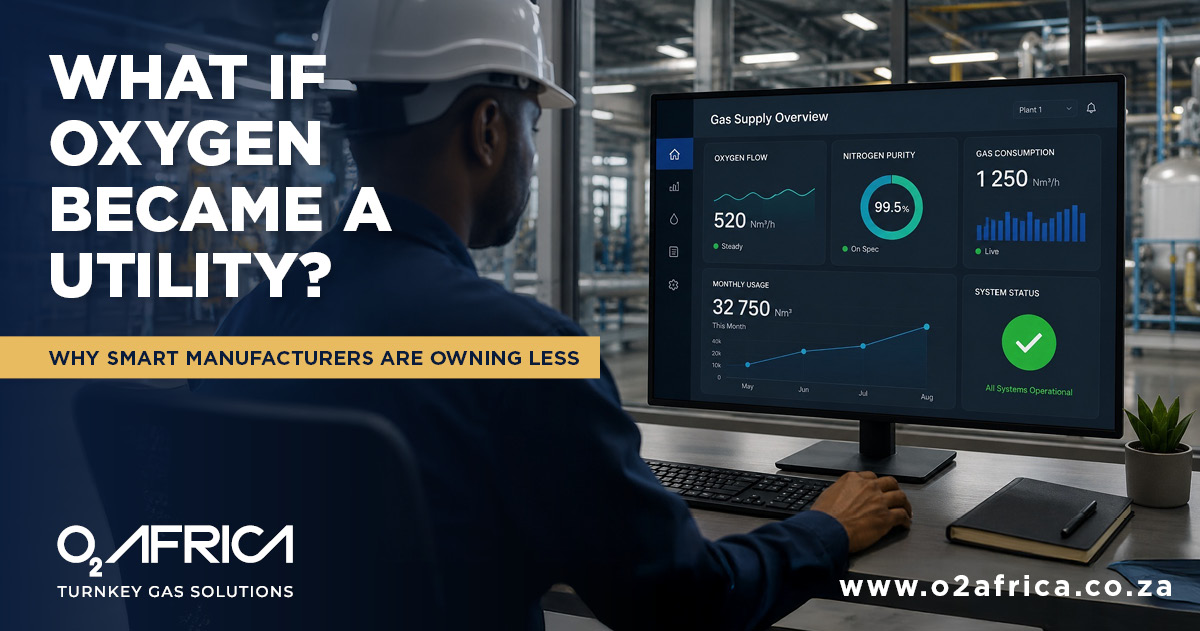
The manufacturer does not need to own the power station. It needs a reliable supply of electricity at an agreed cost. Water works in much the same way. The business pays for the resource it consumes rather than purchasing the entire system responsible for producing and delivering it.
Oxygen and nitrogen can follow a similar model.
Instead of investing millions into equipment that sits outside the company’s core business, the customer can purchase the gas as a service. The generation plant is installed at the customer’s site, but the specialist gas provider finances, manufactures, owns and maintains the system.
The customer receives the operational benefits of on-site gas generation while paying for the gas consumed.
This approach changes the entire financial structure of the project. A large capital purchase becomes a predictable operating cost. The business preserves its available cash, avoids adding another specialised asset to its books and gains access to professionally managed gas production at its own facility.
For many manufacturers, this is a far more comfortable fit.
The plant is still there. The oxygen or nitrogen is still produced on site. The production team still receives the gas it needs. What disappears is the need for the customer to purchase and manage the underlying generation asset.
How O2Africa’s Industrial Gas as a Service Model Works
At O2Africa, we have built our approach around a straightforward idea: businesses should be able to benefit from on-site oxygen or nitrogen generation without being forced to own the plant.
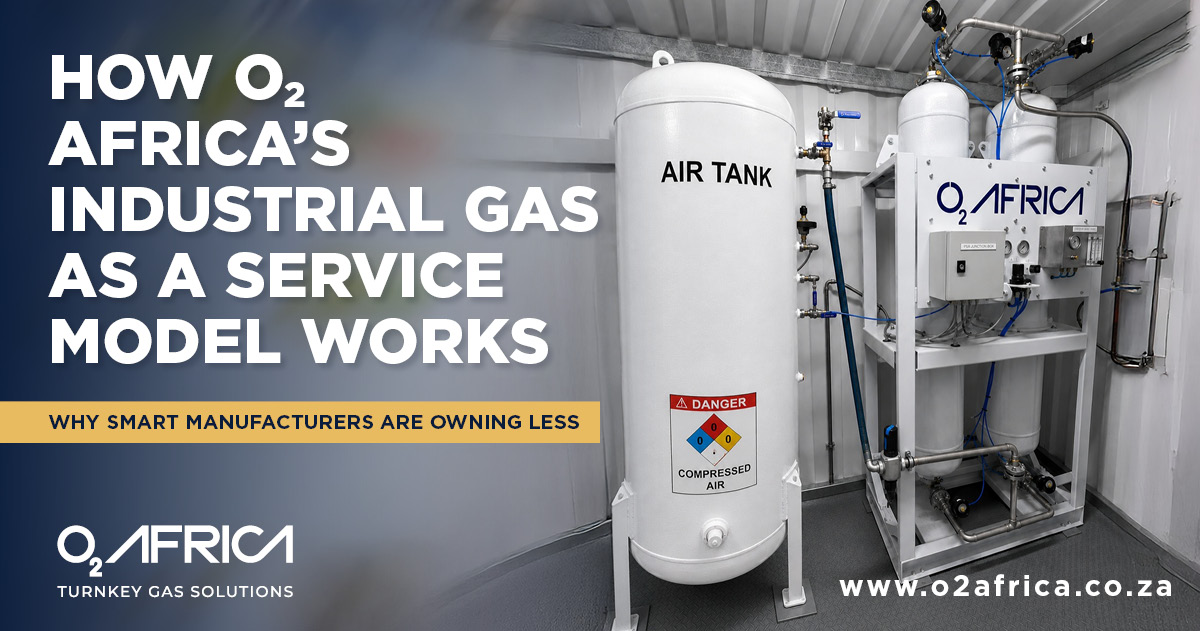
We finance, manufacture, install, own and maintain the PSA gas generation system. The customer purchases the oxygen or nitrogen produced according to the agreed supply arrangement.
This means the customer can preserve capital while gaining the practical advantages of on-site production, including a dependable gas supply, reduced reliance on deliveries and improved visibility over operating costs.
The relationship begins with an engineering assessment. We evaluate the customer’s gas requirements, production environment, pressure needs, purity specifications, consumption patterns and future plans. The system is then designed around the actual operating conditions of the site rather than a generic equipment package.
Once the plant has been manufactured and installed, O2Africa remains responsible for its long-term performance. Remote monitoring, planned maintenance, technical support and system management form part of the relationship.
This is not simply equipment placed at a customer’s premises and forgotten about. The plant remains part of an ongoing service commitment.
More Than a Traditional Equipment Lease
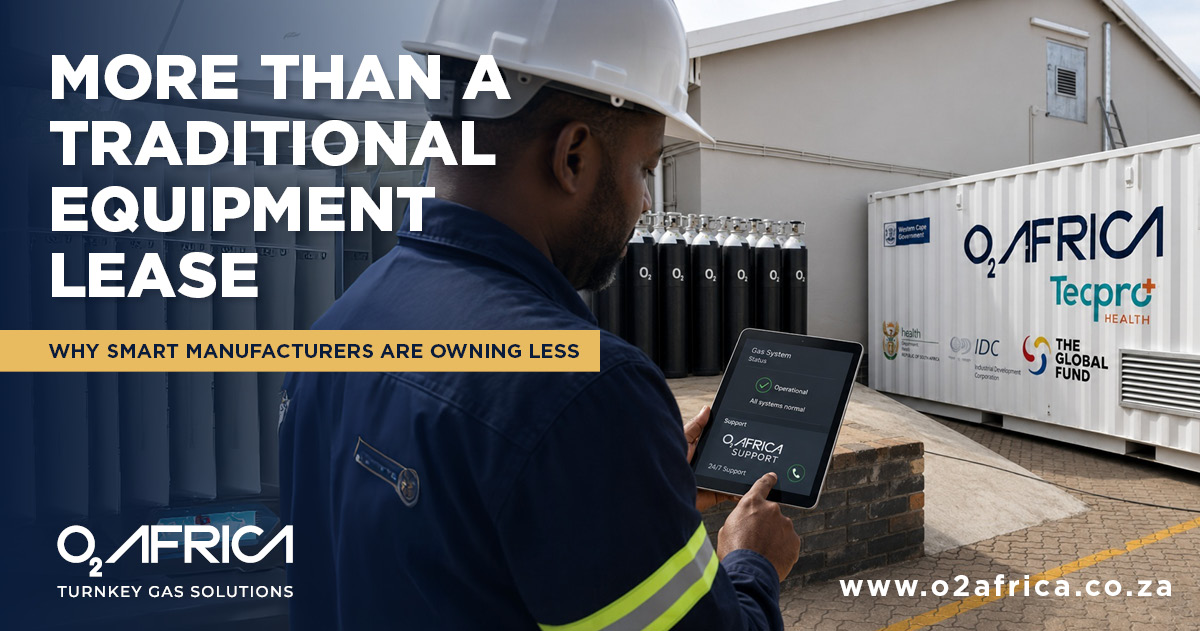
It is important to distinguish industrial gas as a service from a conventional leasing arrangement.
Traditional financing can sometimes create a crowded chain of responsibility. One company manufactures the equipment, another sells it, a finance house owns it and a separate contractor handles maintenance. When performance problems occur, customers may find themselves moving between suppliers, service teams and asset owners while trying to establish who is responsible.
That is hardly the kind of puzzle anyone wants to solve when production is waiting for oxygen.
O2Africa’s model is designed to keep the relationship clear. Customers work directly with one organisation from the first engineering discussion through manufacturing, installation, remote monitoring, maintenance and long-term support.
There is one agreement, one relationship and one organisation accountable for delivering a reliable gas supply.
That clarity matters.
Industrial operations already have enough moving parts. Production managers should not need a flowchart to understand who must respond when a gas system requires attention. By combining engineering, manufacturing, financing and service within one partnership, O2Africa reduces supplier complexity and creates a clearer line of accountability.
Preserving Capital for the Work That Creates Growth
Every business has a limited amount of capital available.
Even profitable companies must choose between competing investments. Management may need to decide whether available funds should be used for a new production line, factory expansion, energy efficiency improvements, product development, automation or specialised equipment.
An oxygen or nitrogen plant may be essential, but that does not automatically mean owning it will generate the best return.
A new production line may increase output. An automation project may reduce waste. Better packaging equipment may improve shelf life and open new distribution opportunities. Additional working capital may allow the company to accept larger orders or negotiate more favourable supplier terms.
These investments can directly affect revenue, margin and market growth.
By comparison, owning industrial gas infrastructure usually supports production rather than creating a new competitive advantage. It is necessary, certainly, but it is still supporting infrastructure.
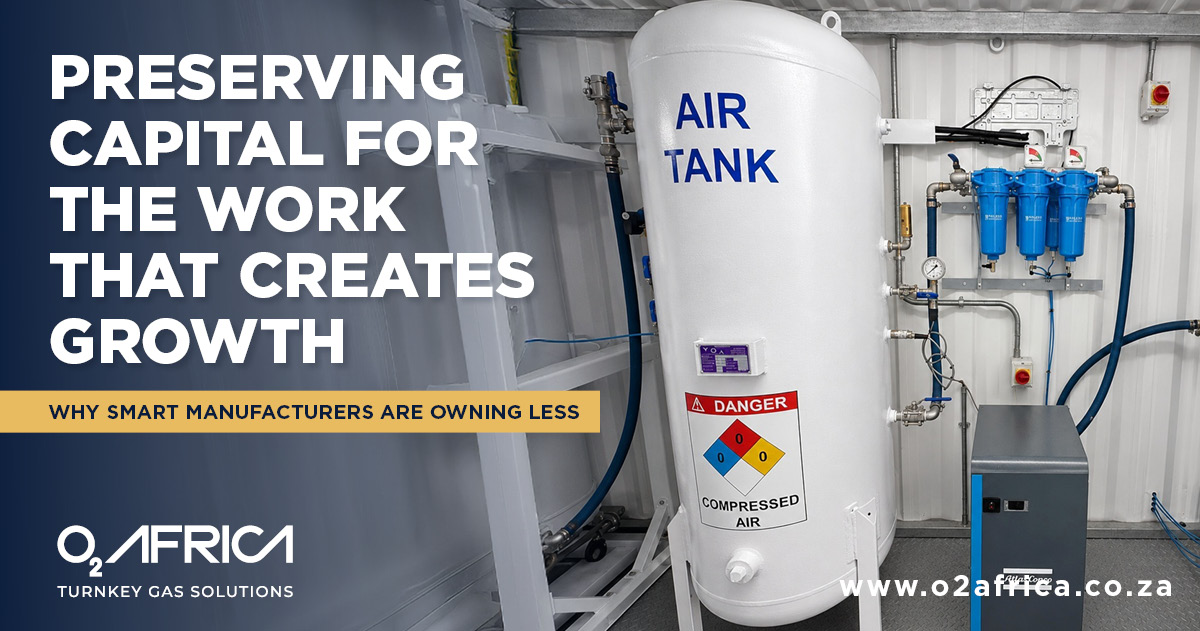
Industrial gas as a service allows businesses to keep capital focused on projects that can produce stronger strategic returns. Oxygen and nitrogen remain available, but they no longer need to compete with expansion and innovation for the same limited capital budget.
For financial teams, the benefits are equally meaningful. A predictable operating expense can be easier to forecast than a large capital project followed by irregular maintenance costs. The business gains greater cost visibility while reducing exposure to unexpected repair requirements or equipment replacement decisions.
A Better Match Between Risk and Responsibility
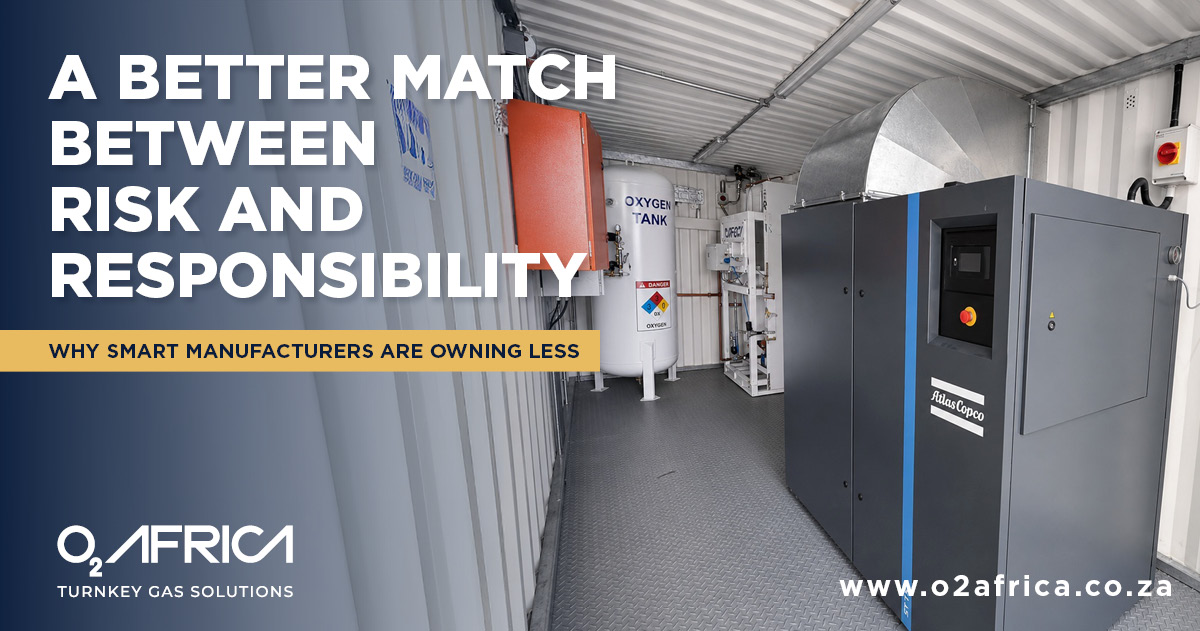
One of the most valuable features of a service-based gas model is that responsibility sits with the organisation best equipped to manage it.
A manufacturer may be excellent at producing food, steel, chemicals, packaging or medical products. That does not mean it should also become an expert in PSA technology, adsorbent performance, compressor management, purity control and gas plant maintenance.
Specialised infrastructure demands specialised knowledge.
When the gas generation system is owned and managed by the service provider, the technical risk moves closer to the engineering team that designed and manufactured the plant. The provider has a direct reason to monitor performance, maintain equipment correctly and respond quickly when intervention is required.
The customer does not have to build a new technical discipline internally or depend on occasional external support for an asset it owns.
This division of responsibility makes practical sense. The customer focuses on production. The gas specialist focuses on gas.
Simple, but powerful.
Why the Model Creates Stronger Accountability
A traditional equipment supplier is largely rewarded when a plant is sold and delivered. After commissioning, the commercial transaction is mostly complete. Support may continue, but the primary sale has already taken place.
Industrial gas as a service changes that relationship.
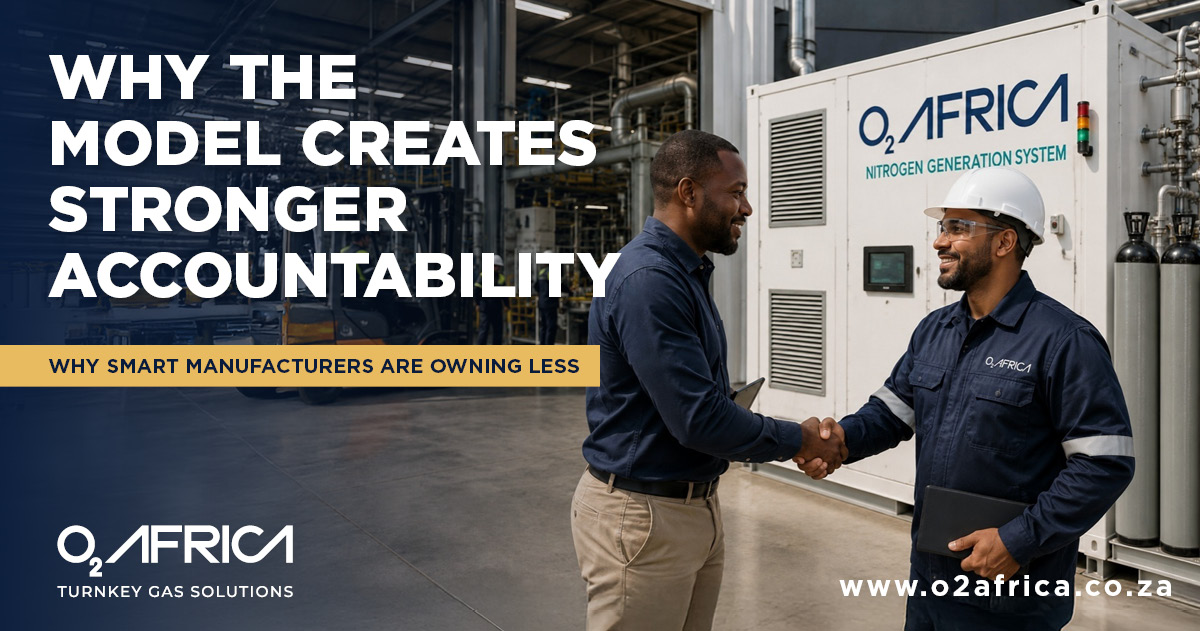
O2Africa succeeds only when the installed plant continues to produce gas reliably, efficiently and consistently over many years. Revenue depends on continued performance, not merely on delivering equipment.
That changes the incentive structure.
Uptime matters. Energy efficiency matters. Preventative maintenance matters. Customer satisfaction matters. A poorly performing plant is not only the customer’s problem, it is also ours.
This shared interest creates something closer to a partnership than a once-off transaction. Both parties benefit when the system operates efficiently and reliably. Both parties want production interruptions kept to a minimum. Both parties have a reason to plan for future changes in demand.
When the customer grows, the gas supply arrangement can also be reviewed and adjusted. Capacity requirements may increase, purity specifications may change or new production processes may be introduced. Because the relationship is ongoing, the gas system can be managed as part of the customer’s operational journey rather than treated as a fixed asset purchased years earlier.
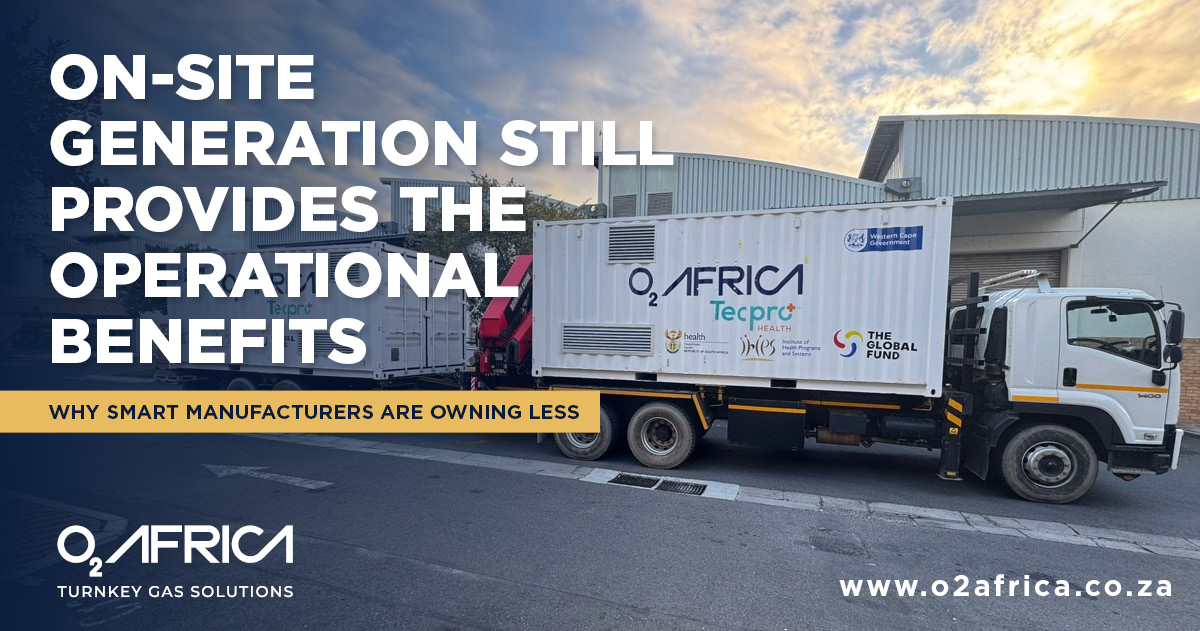
On-Site Generation Still Provides the Operational Benefits
Choosing industrial gas as a service does not mean giving up the benefits of on-site production.
The gas is still generated at the customer’s facility, close to where it is consumed. This can reduce dependence on regular cylinder or bulk liquid deliveries, particularly for sites located far from major industrial gas distribution centres.
Transport schedules, road conditions and supplier availability can all affect delivered gas. In remote mining areas, agricultural operations or growing industrial zones, these challenges can become expensive and disruptive.
On-site generation reduces many of these concerns by turning ambient air into a local raw material.
PSA technology separates oxygen or nitrogen from compressed air using specialised adsorbent materials. The gas required by the customer is produced continuously, while the remaining components of the air are safely released.
The process is well established, but the real value lies in how it is applied. A correctly designed plant must match the site’s consumption, purity, pressure and operating requirements. It must also be supported by suitable air treatment, storage, controls and maintenance systems.
When these elements are engineered and managed correctly, on-site generation can provide a dependable gas supply without the constant arrival and departure of delivery vehicles.
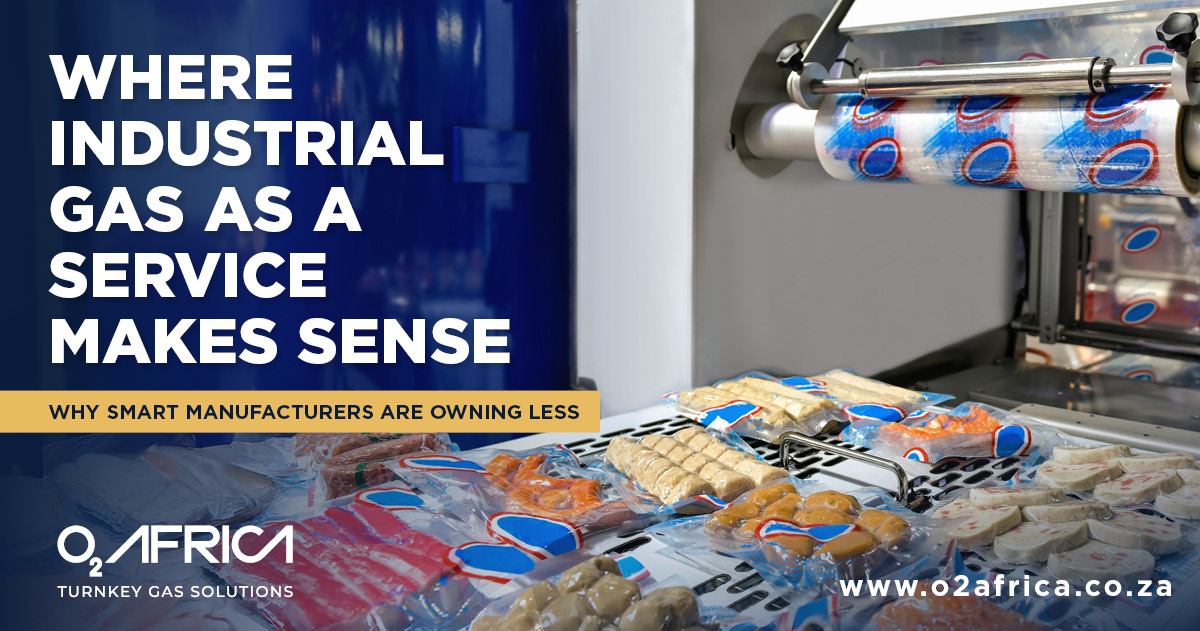
Where Industrial Gas as a Service Makes Sense
The model can be valuable across a wide range of industries.
Food and packaging businesses use nitrogen to protect product quality, extend shelf life and reduce oxidation. Hospitals and healthcare facilities need reliable oxygen for patient care. Aquaculture operations rely on oxygen to support fish health, improve stocking density and stabilise water conditions. Mining and mineral processing sites may require oxygen for process improvement, while manufacturers use oxygen and nitrogen in cutting, brazing, heat treatment and controlled production environments.
These organisations have different operating needs, but the financial question is often similar.
Do they need to own the equipment, or do they need guaranteed access to the gas?
For companies with stable or growing demand, industrial gas as a service can create a strong middle ground. It combines the local reliability of on-site production with the financial flexibility of a service agreement.
The customer avoids the capital burden of purchasing the plant, yet still receives gas generated at its own facility.
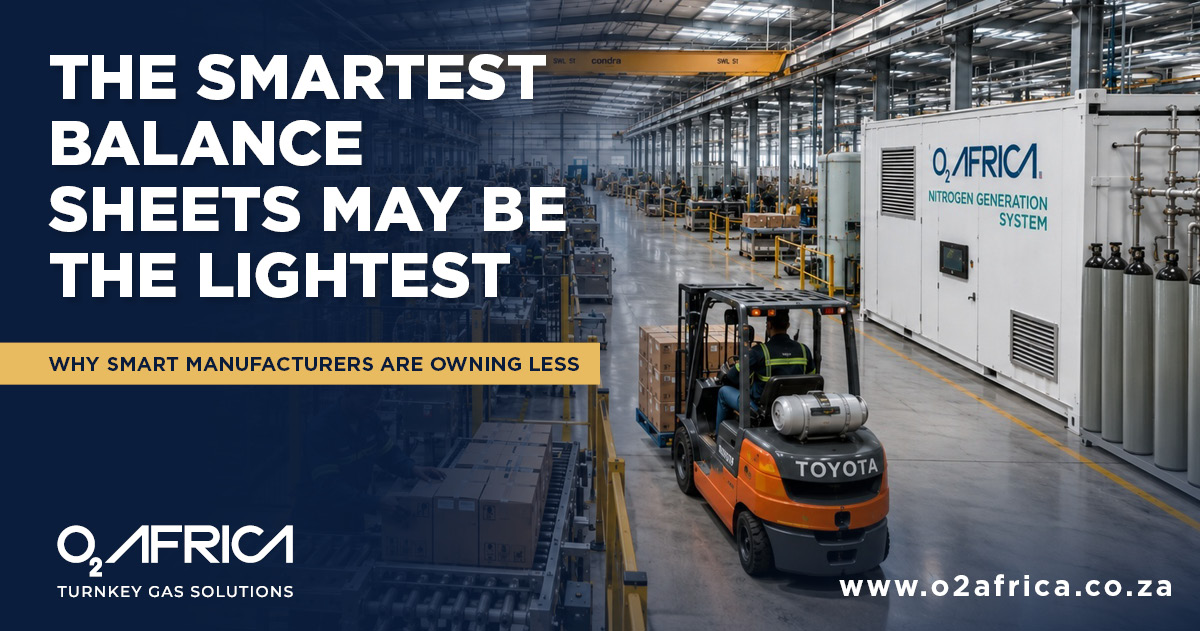
The Smartest Balance Sheets May Be the Lightest
There was a time when owning more assets made a company look stronger. A large asset base suggested permanence, scale and control.
That view is changing.
Modern businesses are becoming more disciplined about what they own, what they outsource and where they place their capital. They are separating the assets that create genuine strategic advantage from those that merely support daily operations.
This does not mean companies should stop owning equipment. Production machinery, proprietary technology and specialised assets may remain central to competitive performance.
The key is selectivity.
A business should own an asset when ownership creates meaningful strategic value. Where it does not, working with a specialist may deliver a better financial and operational outcome.
Industrial gas is an ideal example. Oxygen and nitrogen are essential, but the equipment producing them does not always need to belong to the customer.
The Next Evolution of Industrial Gas Supply
Industrial gas has traditionally been supplied in three main ways: cylinders, bulk liquid deliveries or customer-owned on-site generation.
Industrial gas as a service adds another option.
It gives businesses the reliability of on-site production without the upfront cost and long-term asset responsibility associated with purchasing a plant. It also creates a direct relationship with a specialist provider whose success depends on the continued performance of the system.
For manufacturers, hospitals, mines, packaging companies and aquaculture operations, that can mean greater financial flexibility, clearer accountability and more capital available for growth.
The strongest organisations of the next decade may not be those with the largest asset registers. They may be the ones that understand exactly what they need to own and, just as importantly, what they do not.
Industrial gas will always be essential.
Owning the equipment that produces it may no longer be.