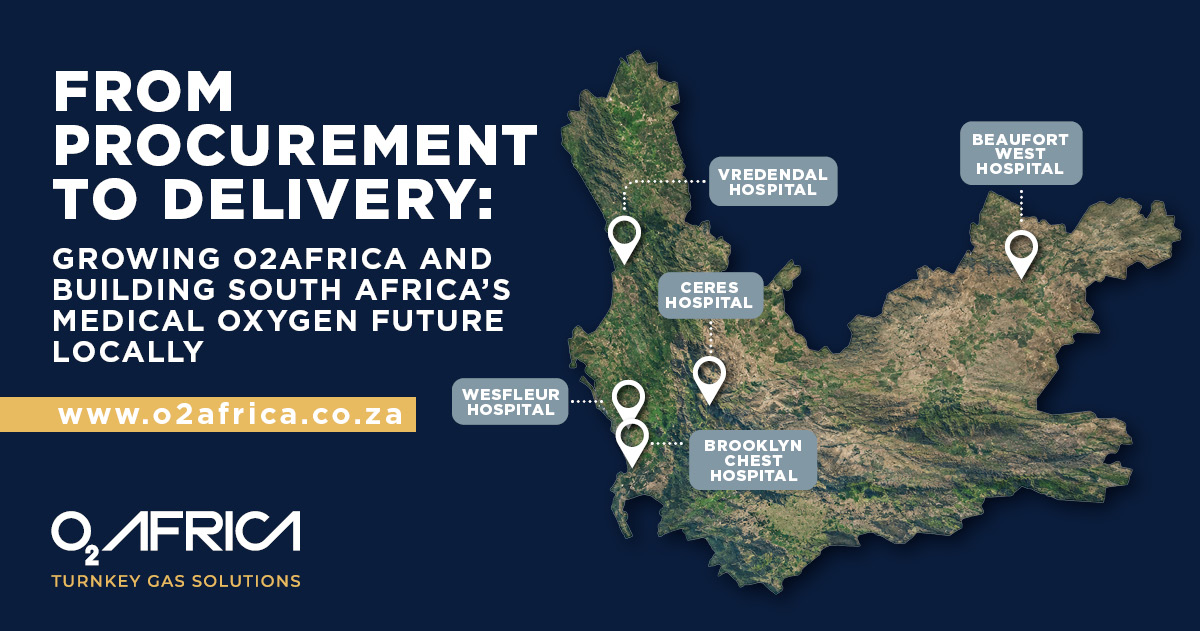
Oxygen Is a Medicine, Not a Commodity
On-site medical oxygen generation systems help hospitals secure compliant, reliable oxygen supply while improving resilience, control, and continuity of patient care.
Categories:
Industry , News , Technology
Date Posted:
January 23, 2026
Why on-site oxygen generation systems matter for hospitals, engineers, and healthcare planners
Oxygen is one of the most relied-upon resources in any hospital, even though it is seldom discussed in strategic planning. From bedside care to critical interventions, it underpins clinical decisions across the entire healthcare facility.
When oxygen works, it fades into the background. When it does not, the consequences surface quickly. That is why the way oxygen is produced, supplied, and managed deserves closer attention than it often receives.
Medical oxygen is not just another utility. It is not water. It is not electricity. And it is not a bulk product that can tolerate disruption, dilution, or compromise.
Medical oxygen is a regulated medicine. At O2Africa, we believe recognising this is fundamental to building safer, more resilient healthcare environments.
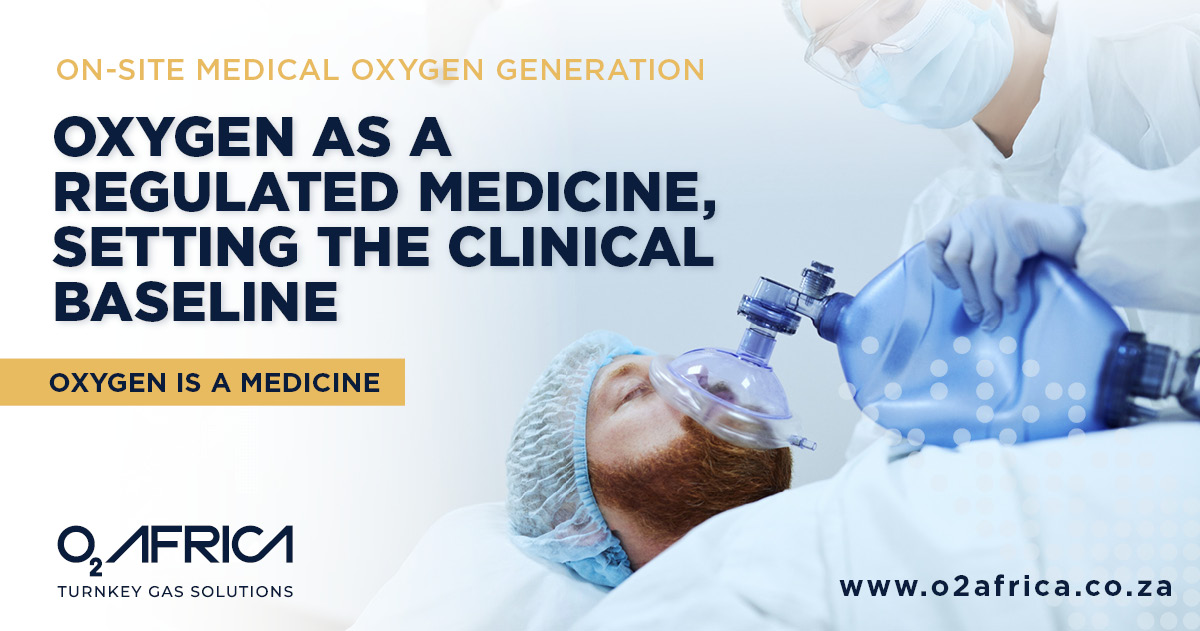
Oxygen as a regulated medicine, setting the clinical baseline
In medical settings, oxygen is prescribed, monitored, and controlled like any other therapeutic substance. That responsibility brings with it very specific requirements.
Hospitals require oxygen at 93 percent purity, with a tolerance of plus or minus 3 percent. This is a clinical standard that underpins patient safety across wards, operating theatres, intensive care units, and neonatal facilities.
Purity alone, however, is not enough.
Medical oxygen must be delivered continuously. It must be safe. It must be available without interruption, regardless of time, location, or external pressures. These expectations are built into clinical practice, even when they are not explicitly discussed.
When oxygen availability drops, patient outcomes often follow the same trajectory. From our perspective, this reinforces why reliability must be designed into the system itself.
At O2Africa, our on-site oxygen generation systems are engineered specifically to meet medical standards. They are designed around how hospitals operate, rather than adapted from industrial use. By producing oxygen on-site, hospitals gain greater control over both quality and continuity, which we see as a meaningful foundation for dependable patient care.
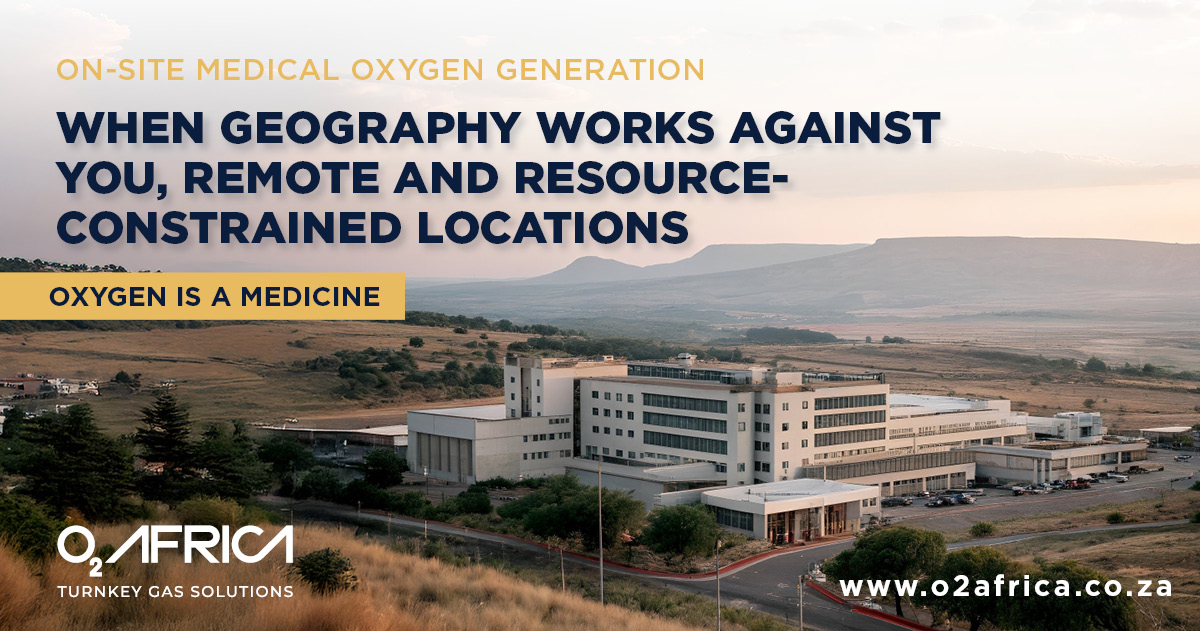
When geography works against you, remote and resource-constrained locations
Many hospitals operate far from established supply routes. Some serve communities where infrastructure is limited and distances are significant.
In these environments, oxygen deliveries can be unpredictable. Delays are common. Missed deliveries are not unusual.
Long delivery routes introduce risk at every point. Roads deteriorate. Fuel availability fluctuates. Vehicles fail. Administrative delays compound operational pressure. Each of these factors affects a hospital’s ability to plan confidently.
On-site oxygen generation systems offer a practical way to reduce this exposure.
By generating medical oxygen directly at the hospital, facilities become less dependent on external logistics. Delivery schedules matter less. Transport risk is reduced. Supply interruptions become easier to manage.
For many hospitals, particularly in remote or underserved regions, on-site oxygen generation systems are not about convenience. They are about ensuring that oxygen is available when patients need it, without relying on uncertain supply chains.
We see this as an important shift. One that gives healthcare teams greater confidence that a critical part of their care environment is within their control.

Compliance is non-negotiable, safety, regulation, and SAHPRA
Producing oxygen is one thing. Producing compliant medical oxygen is another.
Medical oxygen systems must meet strict regulatory and safety requirements. In South Africa, this includes compliance with SAHPRA regulations governing medical devices used in clinical environments.
Compliance extends beyond purity levels.
Systems must meet medical device standards.
They must consistently maintain oxygen purity.
They must include alarms, redundancy, and safety features appropriate for patient care.
Pressure instability, contamination risks, or system failures are not abstract technical issues. They are factors hospitals plan around every day.
O2Africa is a SAHPRA-certified manufacturer of on-site oxygen generation systems for medical use. For us, this certification reflects a broader commitment to building systems that belong in hospitals, not just technically, but operationally.
We regard on-site oxygen generation systems as part of a hospital’s life-support infrastructure. That belief shapes how we design, test, and support every installation.
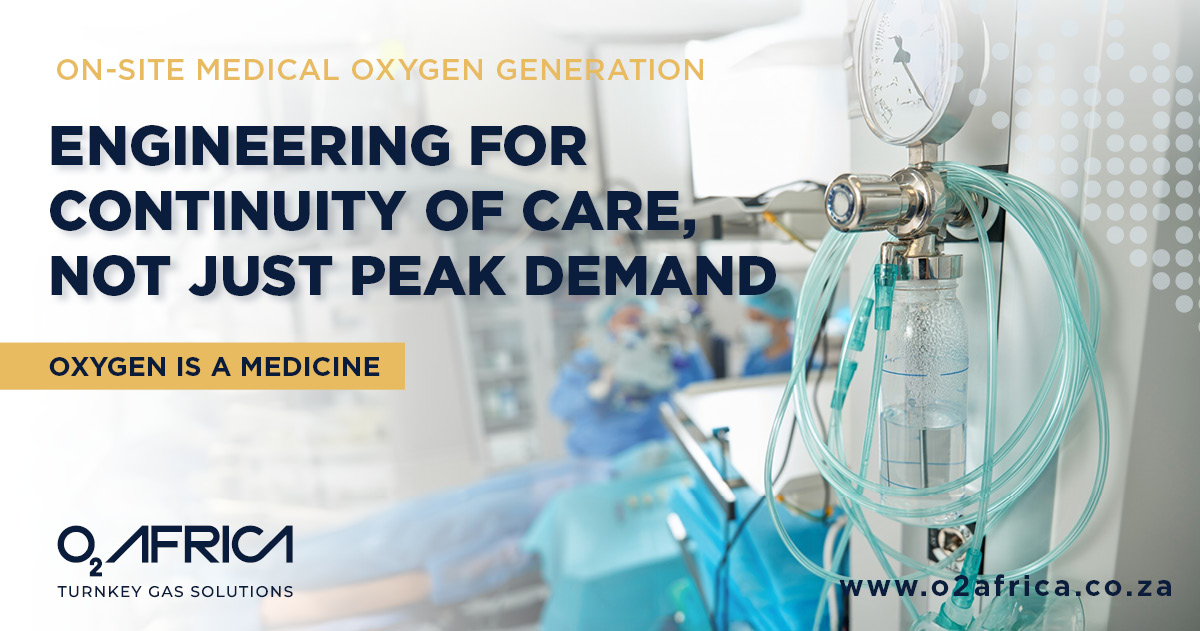
Engineering for continuity of care, not just peak demand
Hospital oxygen demand fluctuates constantly. Surgical schedules, emergency admissions, and seasonal illness all affect consumption. What does not change is the expectation that oxygen supply remains uninterrupted.
Engineering for continuity means designing systems that respond to real clinical demand patterns.
Our on-site oxygen generation systems are engineered to align with these realities. They are designed to integrate with existing medical gas pipelines and operate continuously with a focus on uptime and stability.
Whether containerised for rapid deployment or built directly on-site as part of a permanent facility, the objective remains consistent. To support uninterrupted oxygen delivery at the point of care.
From our experience, dependable on-site oxygen generation systems reduce uncertainty for clinicians and technical teams alike. That stability supports better planning and, ultimately, better care.
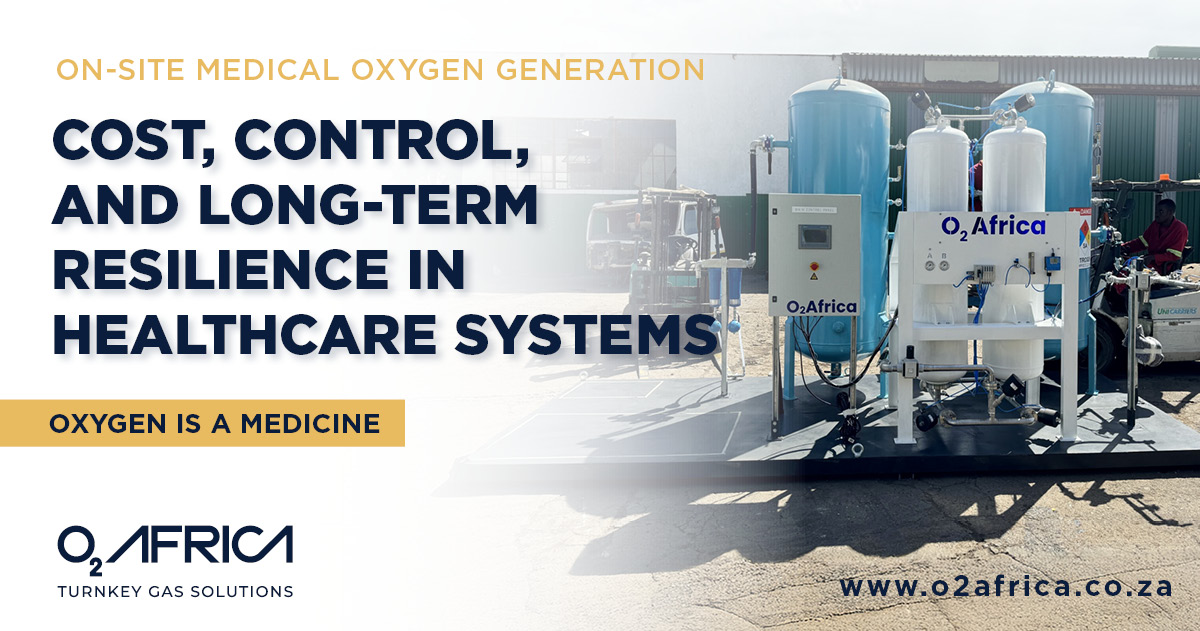
Cost, control, and long-term resilience in healthcare systems
Traditional oxygen supply models, based on cylinders or liquid oxygen deliveries, introduce ongoing challenges for hospitals.
- Price volatility affects budgeting.
- Logistics disruptions complicate planning.
- Single-supplier dependency limits flexibility.
On-site oxygen generation systems offer an alternative approach that shifts greater control back to the hospital.
By generating oxygen internally, facilities reduce reliance on external suppliers and transport networks. Over time, operating costs become more predictable, and supply planning becomes less reactive.
We believe this shift supports long-term resilience rather than short-term savings alone. Healthcare systems face sustained pressure, and infrastructure decisions increasingly need to strengthen stability and continuity.
Reliable on-site oxygen generation plays a quiet but important role in that resilience.

Why on-site oxygen generation fits the future of hospital design
Hospital designers and engineers are placing greater emphasis on resilience, redundancy, and adaptability. Oxygen infrastructure is now part of that broader conversation.
On-site oxygen generation systems align naturally with these priorities.
- They reduce dependence on external supply chains.
- They integrate with existing medical gas infrastructure.
- They support phased expansion as facilities grow.
For new hospitals, on-site oxygen generation systems can be incorporated into the design from the outset. For existing facilities, they can be added as part of infrastructure upgrades, often with minimal disruption to clinical operations.
We see this flexibility as one of the defining strengths of on-site oxygen generation.
A system designed to support care, quietly and consistently
Oxygen infrastructure rarely draws attention when it performs as expected. Patients do not ask about it. Visitors seldom notice it. That quiet reliability is exactly what hospitals aim for.
Behind the scenes, however, decisions about oxygen supply influence clinical outcomes every day. They shape how confidently clinicians work and how resilient facilities remain when external systems are under strain.
At O2Africa, we view on-site oxygen generation systems as part of a wider healthcare ecosystem. One that prioritises reliability, compliance, and long-term thinking.
Medical oxygen is a medicine. We believe it deserves the same care, engineering, and responsibility as any other clinical resource.
When hospitals invest in on-site oxygen generation systems, they are strengthening their ability to deliver consistent care, even when conditions around them change.
That belief continues to guide how we design, build, and support medical oxygen infrastructure across the region.