Containerised Medical Oxygen Plants: A Smarter Way to Secure Oxygen Supply
Containerised Medical Oxygen Plants provide a reliable, scalable solution for on site oxygen generation, reducing infrastructure demands while ensuring consistent medical-grade oxygen supply.
Categories:
Industry , News , Technology
Date Posted:
April 9, 2026
Containerised Medical Oxygen Plants: A Smarter Way to Secure Oxygen Supply
Reliable access to oxygen is one of those things healthcare systems simply cannot afford to get wrong. When supply becomes inconsistent, everything else begins to strain. Patient care slows, costs rise, and staff are forced into reactive decision-making rather than focused treatment.
That is why Containerised Medical Oxygen Plants are gaining traction across hospitals, clinics, and regional healthcare networks. They offer something refreshingly practical, a way to generate oxygen on site, without the long timelines, heavy infrastructure, and financial barriers that often come with traditional systems.
Let’s walk through what makes this approach different, and why it is becoming a preferred solution.

Why Containerised Medical Oxygen Plants Are Changing Healthcare Infrastructure
Traditional oxygen supply models rely heavily on logistics. Cylinders must be delivered, bulk tanks need refilling, and disruptions can ripple quickly through the system. It works well when everything runs smoothly, but healthcare rarely operates under perfect conditions.
Containerised Medical Oxygen Plants shift that dynamic. Instead of depending on external supply chains, oxygen is generated directly at the point of care. This reduces vulnerability to delays and gives facilities far greater control over their supply.
There is a subtle but important shift here. Oxygen stops being something that arrives, and becomes something that is always available.

Designed for Real-World Conditions, Not Ideal Ones
Not every hospital sits in a well-serviced urban environment. Some operate in remote regions where infrastructure is limited. Others deal with inconsistent power, harsh climates, or long distances between suppliers.
Containerised systems are built with these realities in mind. The container itself protects the equipment from environmental exposure, while the internal systems are engineered to operate reliably under pressure, both literal and operational.
They are not delicate installations that require perfect surroundings. They are robust, self-contained systems that continue performing even when external conditions are unpredictable. That reliability is not accidental, it is designed into every aspect of the system.

Plug-and-Play Simplicity That Reduces Delays
Healthcare infrastructure projects are often slowed by complexity. Multiple contractors, phased construction, and lengthy commissioning processes can stretch timelines far beyond initial expectations.
Containerised Medical Oxygen Plants take a different route. Because the system is fully assembled and tested before delivery, installation becomes far more straightforward. Once on site, it requires only a prepared foundation, a power connection, and integration with the existing oxygen distribution network.
From there, the system moves quickly into operation. There is no extended construction phase, no drawn-out setup. Just a clear, direct path from delivery to oxygen production.

Rapid Deployment When Time Actually Matters
Speed is often discussed in technical terms, but in healthcare, it has a very human dimension. Delays in oxygen availability can directly impact patient outcomes, particularly in high-demand or emergency situations.
With containerised systems, much of the time-consuming work has already been completed before the unit arrives. This allows facilities to move from installation to operation in a matter of days, rather than waiting through months of construction and setup.
That kind of responsiveness can change how facilities plan and react. Instead of anticipating delays, they can act with confidence, knowing that supply can be established quickly and reliably when needed.
What Makes Up a Containerised Medical Oxygen Plant?
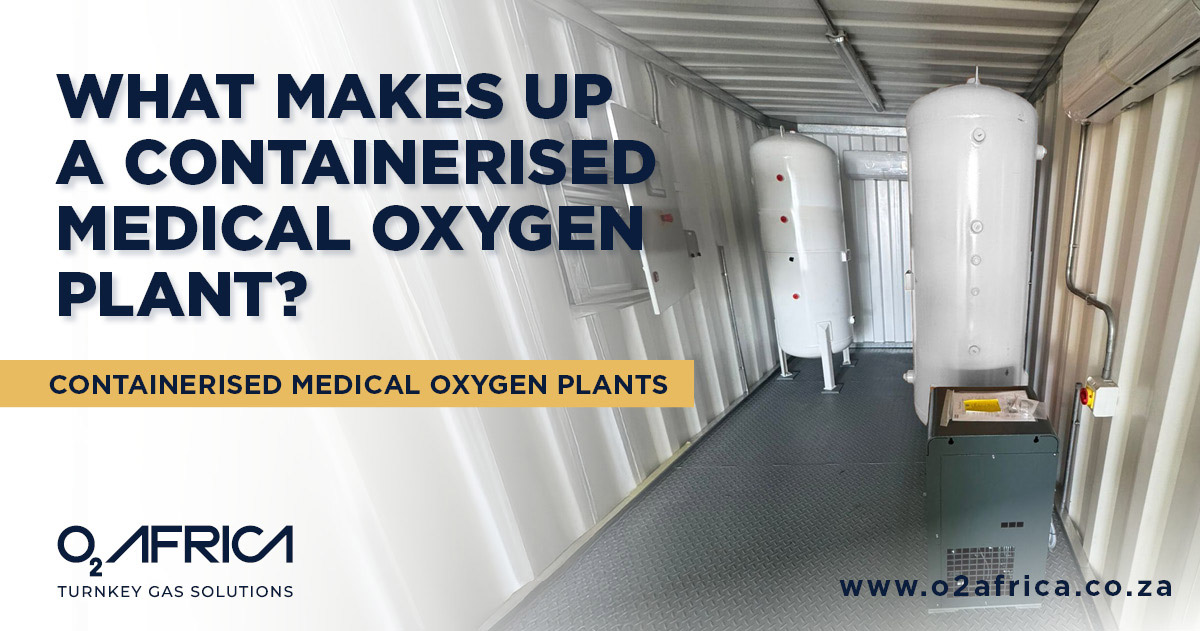
From the outside, a containerised plant may appear unassuming, just a standard shipping container placed within a hospital environment. But inside, it houses a carefully integrated system designed to manage the entire oxygen generation process.
The system includes air compressors that draw in ambient air, filtration units that remove impurities, and PSA technology that separates oxygen from nitrogen. Alongside these core components are storage tanks and control systems that regulate pressure, monitor output, and ensure consistent delivery.
What sets this apart is not just the technology, but how it is delivered. Every component is assembled, configured, and tested before leaving the factory. This eliminates much of the uncertainty that typically comes with on-site construction and ensures that performance is reliable from the moment the system is activated.

Consistent Oxygen Quality That Meets Medical Standards
In medical environments, consistency is everything. Oxygen must meet specific purity standards to be considered safe for patient use, and there is little room for variation.
Containerised PSA systems are designed to produce oxygen at approximately 93 percent purity, within a controlled margin. This aligns with established medical standards and ensures that the oxygen delivered is suitable for a wide range of clinical applications.
For engineers and healthcare professionals alike, this consistency provides reassurance. It means the system is not only functional, but dependable in the quality of output it delivers over time.

Flexible Supply for Pipelines and Cylinders
Healthcare systems rarely operate in isolation. A single hospital may need to support multiple wards, satellite clinics, or even surrounding facilities.
Containerised Medical Oxygen Plants offer the flexibility to do exactly that. They can supply oxygen directly into a hospital’s pipeline system, ensuring immediate availability for patient care. At the same time, they can be configured to fill cylinders, which can then be distributed to other locations.
This dual capability adds a layer of adaptability that is often overlooked. It allows facilities to extend their reach, supporting broader healthcare networks without needing entirely separate systems.

Minimal Infrastructure, Maximum Impact
One of the more practical advantages of containerised systems is how little they demand from the site itself. Traditional installations often require extensive groundwork, structural preparation, and long build phases.
In contrast, containerised plants require only the essentials. A level surface, a reliable power connection, and integration into the existing oxygen network are typically sufficient to get the system up and running.
This minimal requirement reduces both time and cost, but it also lowers the barrier to implementation. Facilities that might otherwise struggle to support large infrastructure projects can still access reliable oxygen generation.
A New Financial Model: Oxygen-as-a-Service
For many healthcare providers, the challenge is not understanding the need for oxygen infrastructure, it is finding a way to fund it. Large capital investments can delay decision-making, particularly in public or donor-funded environments.
O2Africa addresses this with a service-based model that shifts the financial structure entirely. Instead of purchasing the plant, the hospital enters into an agreement where O2Africa funds, installs, and maintains the system. The facility then pays based on the oxygen it consumes.
This approach simplifies budgeting and removes the need for significant upfront expenditure. It also ensures that maintenance and performance are handled by specialists, reducing the operational burden on the healthcare provider.

Built to Scale and Support Long-Term Demand
Healthcare demand is rarely static. Facilities grow, patient numbers increase, and service requirements evolve over time. Any long-term solution needs to account for that.
Containerised Medical Oxygen Plants are designed with scalability in mind. Their modular nature allows for additional capacity to be added as needed, whether through system upgrades or additional units.
At the same time, ongoing support and maintenance ensure that performance remains consistent as demand grows. It is not just about meeting current needs, but about providing a system that can adapt alongside the facility it serves.